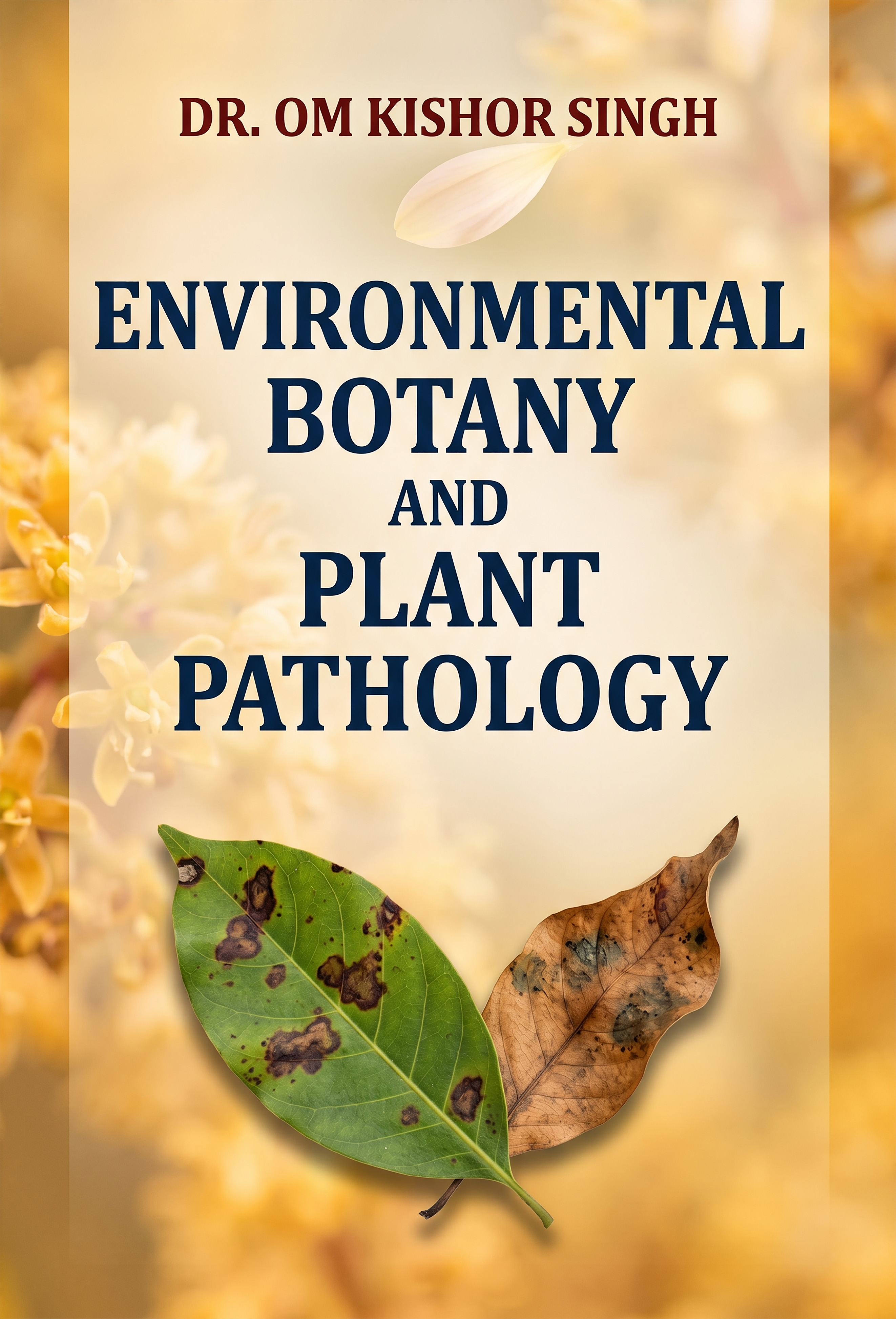
Environmental Botany and Plant Pathology
by Dr. Om Kishor Singh
₹495
| ISBN | 9789381750605 |
| Language | English |
| Publication Year | 2013 |
| Edition | 1 |
| Pages | 240 |
| Binding | Paper Back |
| Publisher | VPMANDIR |
About this book
Environmental Botany and Plant Pathology has, in recent decades, moved from the margins to the very centre of undergraduate plant science. The reasons are not difficult to find. The degradation of our soils, the contamination of air and water, the steady erosion of forests and gradual loss of biodiversity, the disquieting signals of a changing climate, and the recurring threat of disease to our crops and food supply are no longer distant concerns — they are the lived realities of contemporary India. A student of Botany today cannot be considered well educated unless he or she understands both how plants sustain the environment and how the environment, in turn, governs the health of plants. This book has been written in that conviction. The volume is designed specifically for Undergraduate students who opt for botany as a major or core subject among different popular subject combinations viz. Botany-Zoology-Chemistry, Botany-Biotechnology-Chemistry, Botany-Chemistry-Defence Studies and it is organised into four units. Unit I introduces the natural resource base — minerals, soils, water, energy, and forest wealth. Unit II examines pollution in its many forms, together with the great atmospheric disturbances of our age: the greenhouse effect, ozone depletion, acid rain, and climate change. Unit III turns to ecology and plant geography — biotic communities, population dynamics, the natural vegetation of India, and the principles that determine where plants grow. Unit IV is devoted to plant pathology, surveying the principal viral, bacterial, fungal, and insect-pest diseases of economically important crops and the modern philosophy of Integrated Pest and Disease Management. A concluding chapter draws these strands together. Throughout, the guiding aim has been to combine rigour with readability. Each chapter opens by placing its subject within a wider scientific and national context before developing it with the precision expected at the undergraduate level. Technical terms are explained on first use; factual statements are supported by reference to peer-reviewed studies, standard texts, and authoritative reports; and Indian examples — our soils, our rivers, our forests, and our crops — have been preferred wherever possible, so that the student may see the science reflected in the land around them. Clearly labelled diagrams accompany every major concept, and review questions framed in the examination style appropriate to the maximum marks in an exam paper are provided at the close of each chapter. Two themes run quietly through the whole book and deserve to be named at the outset: conservation and sustainability. These are not merely fashionable words but the moral and practical compass of the discipline. The constitutional duties enshrined in Articles 48A and 51A(g), together with the rich tradition of environmental stewardship in Indian thought, give this study a significance that extends well beyond the examination hall. Author is sincerely hopeful